


Mobile applications and services in a couple of weeks: myth or reality?
If you decide that your business needs an application, the following questions arise: who will make it, how quickly will it work, how much will it cost? It is logical that you want to release the product to the market as soon as possible. The developer of the Yo app, which sends a greeting to contacts from the phone book, created it in 8 hours. Subsequently attracted $ 1 million investment. Of course, that is an exceptional case. But if you flip through the pages of organic results, you can find the desired numbers in a few weeks.
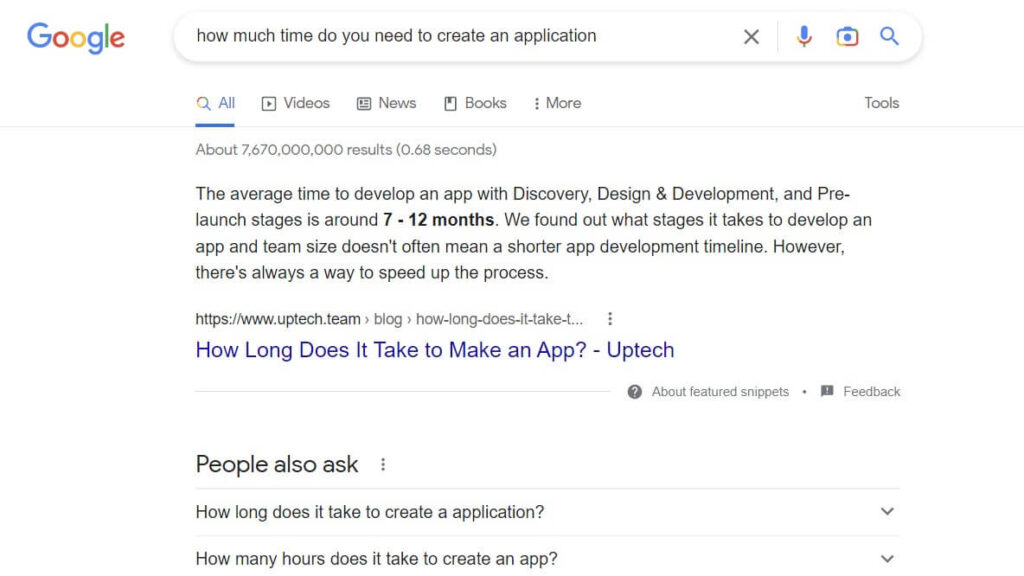
The customer, who had not dealt with the development area before, in turn, receiving an estimate from us and seeing other deadlines, is surprised — after all, Google promised him something else! Let’s figure out under what conditions you can launch a product in a short time.
What do you need to bring to the team?
Let’s pay attention right away that when it comes to launching in a few weeks, we will only talk about MVP — the minimum viable product with the minimum necessary functionality that is of value to the user. By publishing an application in this format, you will test your idea, and check whether your audience needs a mobile service or a sufficiently adapted version of the site.
To be able to develop the application as quickly as possible, the customer needs to have a clear understanding of what he wants to get as an output, for whom he creates it, why this service will be needed, and what goals it needs to achieve. It’s great if you have a fully developed description of the business logic and functionality of the future MVP.
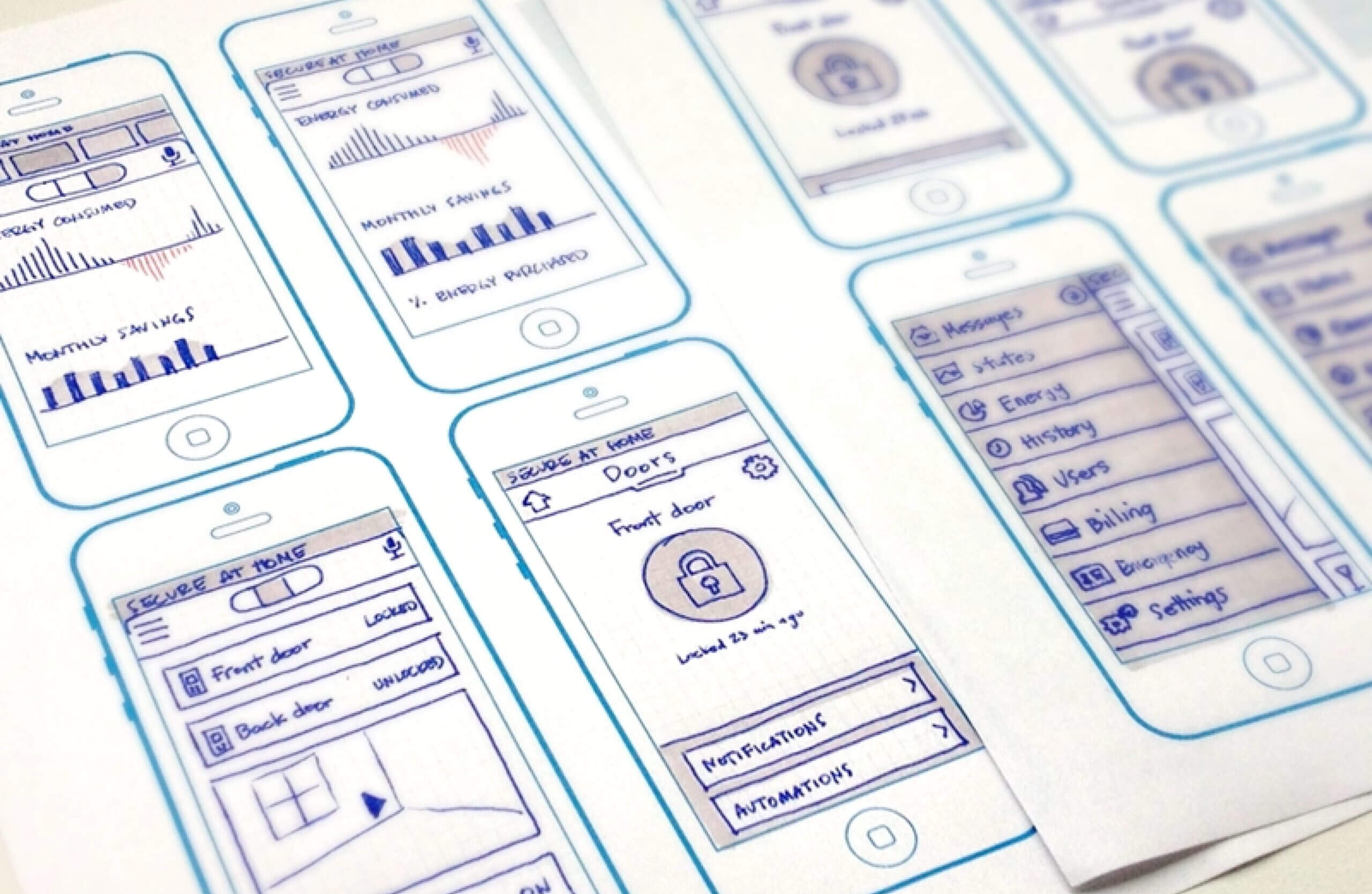
In any form — terms of reference, text and graphic description, low-level screen layouts, wireframes, clickable prototype. Any such materials will allow better synchronization of the interaction between you and the development team.

What can the development team offer you?
If we are talking about a launch within a few weeks, then most likely it will be either no-code / low-code development options or a webview-based product. It is possible to use a template-ready solution based on no / low-code when it is necessary to adapt minimally — and within a few weeks, this is real. When developing an MVP from scratch, you should expect a period of 1-2 months to create an individual solution natively or cross-platform. In a short time, a service is possible on a webview — a component that allows you to embed a site inside an application. This is done very quickly, but has several drawbacks, for example, the risk of problems with publishing such an application in the stores. Operating system vendors themselves struggle with projects that they believe do not provide the functionality to the user.
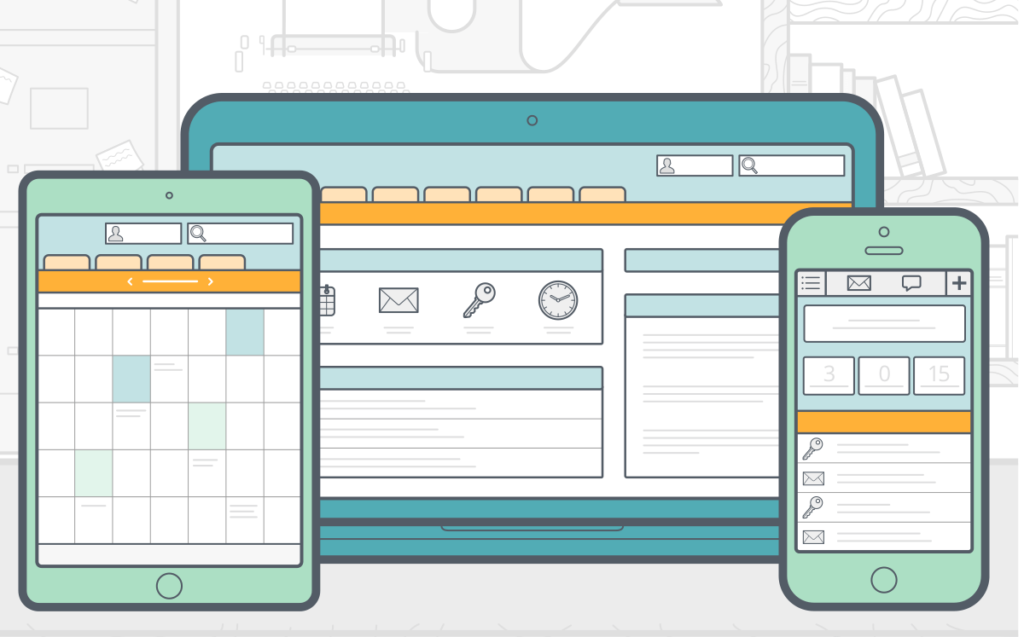
Template solutions are suitable for projects that are e-commerce, delivery, ed-tech, information systems, and catalogs — these areas have been quite popular for more than a year, and quick assembly options have already been developed for them.
You can also have time to implement a prototype to test the operation of a function. Of course, that will be a limited solution in its capabilities, and it will be problematic to use the developments on which to create a full-featured service. At the same time, it will demonstrate, for example, some elements of the application’s interaction with the user, and will allow you to evaluate the correctness of the work of ready-made libraries that are supposed to be used in the project. Such work is often purely exploratory in nature but has the potential to save time and money in the future.
Another option available is PWA (Progressive Web Apps). This technology allows your client to install a website on their phone as an application. It is suitable for companies that need to check in the shortest possible time how valuable the application format can be for the target audience, try sending push notifications or test some other simple hypotheses. In addition, a PWA application can use geolocation, a microphone, and a camera on the user’s device. There does not need to be published in the stores, can be downloaded from the browser, and does not require a constant Internet connection. PWA technology can be useful for brand memorability: the logo is constantly on the user’s screen, in addition, the option to send push notifications saves the cost of remarketing campaigns because the offer can be delivered to a part of the target audience using a notification.
More often than not, when releasing an MVP, we abandon peripheral features that would be nice to have. They help make the user experience of interacting with the application more positive. For example, searching and filtering through a catalog: when we make a catalog, at the initial stages we may not implement a search in it, assuming that the number of positions will be limited and a tool will not be required. Of course, where the catalog is a key component, where there are more than 1000 positions, search and filtering will be difficult to neglect during development. Nevertheless, these are peripheral functions. They are moved to the backlog and planned for the next releases. Therefore, in such short-term launches, you need to be prepared for the scope of functions to be cut. That is normal to approach for an MVP, and it is almost always justified. Launching a new product is always a test, and if the hypothesis turned out to be wrong, you, in turn, will spend fewer resources than you could, implementing many additional features to the main feature that may not work for your audience.
Is it possible to optimize process management?
In general, processes can be conducted in any way: in conjunction, in sequence, and parallel. Different companies take different approaches. A canonical story is first a technical task, then a design. And several teams first make the design and work out the layouts, and the technical specifications in this process are absent or come in a compressed form. The design has a primary form for both the customer and the development team. And it is pointless to argue that it is better to evaluate the result.
Development can start even before the completion of writing the terms of reference. That corresponds to the principle of a flexible approach, agile, which we apply in our work. We break the implementation into separate sprints and prepare our descriptions for each sprint. That allows not to work out the entire logic of the service at the initial stage (if the task does not have a lot of time and resources), but to prepare technical specifications, design, and develop iterations.
What risks do you need to consider?
Often, along with a reduction in launch time, the task is to reduce the cost of implementation. In most cases MVP is a relatively crude product in terms of detailing and filling with additional peripheral functions. For MVP launch purposes, uniqueness and design detail can be neglected, less time is spent on interface design, and some ready-made components are used. Tasks are shifting towards functionality, rather than visual development.
Of course, it is not always the case. There are projects where they manage to prepare and work out the design as fully as possible. The aerobatics will be to take into account all the pitfalls — possible unrealized elements — and find a balance between a minimum workable product and a more detailed solution. To achieve this, you need serious preliminary work that the customer can do on their own: analyze the market and competitors, understand their target audience, and study the user path in existing and similar products to yours. Explore an extra week — save a month of development time. And how much it is in money can be calculated at the rate of your contractor.
Real launch times
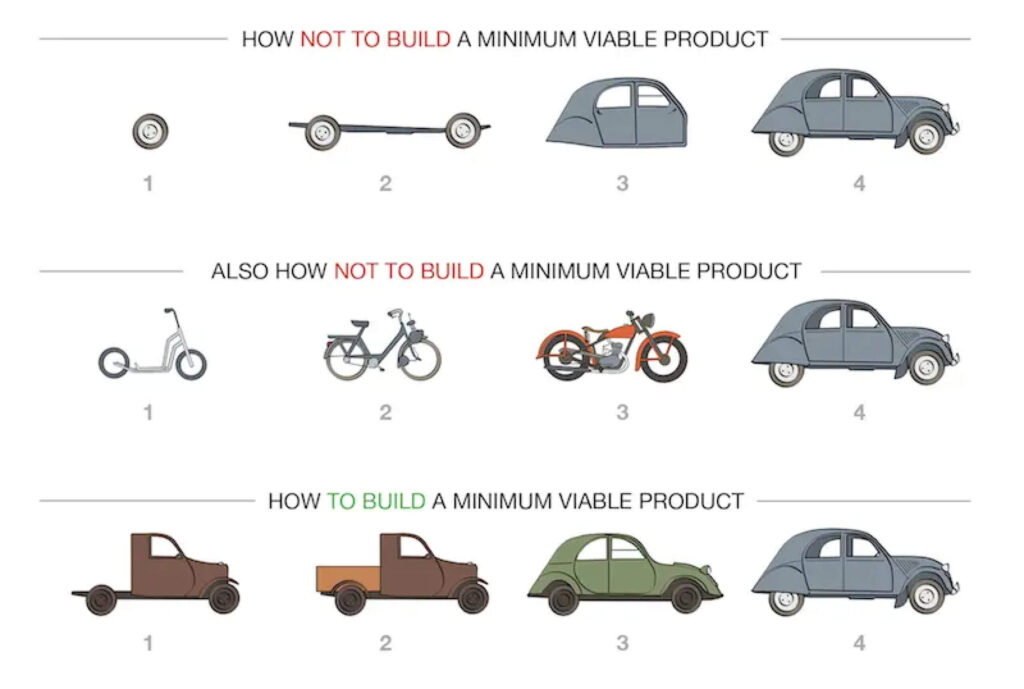
We answer the main question we started with: in two weeks you can only make a prototype, or adapt a ready-made solution. When we talk about real cases of product release on the market, we will talk about 2-3 months or more, depending on the content of the service, the requirements for it and the final functionality.
If you have any questions or have an idea for a product, we can discuss it in detail. To do this, fill out the form below or contact us in any way convenient for you — let’s think about how to implement your project together!
Do you want to order a service?
Leave a request and our specialist will contact
you to discuss the project
